Understanding Blood Glucose Management at Camp
Blood Glucose Management
At Camp Hertko Hollow, your child’s safety and wellbeing are our highest priorities. Each summer, many parents notice that their child’s “time in range” at camp is different than what they typically see at home, and we want to help you understand why this happens and how we intentionally manage blood glucose in a camp environment.
Why Blood Glucose Patterns Look Different at Camp
A week at diabetes camp is very different from a child’s normal routine. Camp schedules, meals, physical activity, and the outdoor environment all create unique conditions that affect blood glucose levels—even for campers who are typically very stable at home.
Most campers experience:
- More physical activity (all-day walking, sports, swimming, and high-energy games)
- Different foods and meal timing compared to home
- More excitement and stimulation, which may impact appetite and hormones
- Less sleep or different sleep patterns
- Heat, humidity, and outdoor conditions, all of which can influence blood sugar
These factors can make blood glucose more variable than usual—and that’s expected.
Our Camp Blood Glucose Range: 100–240 mg/dL
While many families use a home target range such as 70–140 mg/dL, camp uses a slightly higher safety range of 100–240 mg/dL. This is intentional and based on decades of diabetes-camp best practices.
Why we use a higher range at camp
Safety in a group environment
Unlike home—where parents may monitor their child closely—camp medical staff oversee many campers. A slightly higher range:
- Reduces urgent low-blood-sugar events
- Ensures staff can respond promptly and effectively
- Helps keep the entire camp moving smoothly and safely
Preventing dangerous lows during high activity
Campers are constantly on the move—often much more than at home. Keeping blood glucose slightly higher helps prevent rapid drops during:
- Walking between activities
- Sports and field games
- Swimming
- Hiking
- Heat exposure
Ensuring safe travel around a large camp property
Our camp spans a large area, and cabins, dining halls, and activity spaces are spread out. We maintain higher target ranges so campers can safely move from point A to point B without sudden lows that could occur during these transitions.
Food variety and unpredictable eating patterns
Camp meals look different from home meals, and excitement or nerves may lead campers to eat more or less than usual. A higher target allows flexibility and reduces the risk of insulin stacking or food-related lows.
Sleep and schedule changes
Camp days are long, exciting, and full of stimulation. Bedtimes, wake times, and nighttime activity vary, which can affect overnight blood sugar stability. Our range prioritizes overnight safety without compromising learning or fun.
How Staff Actively Manage Blood Glucose Throughout the Day
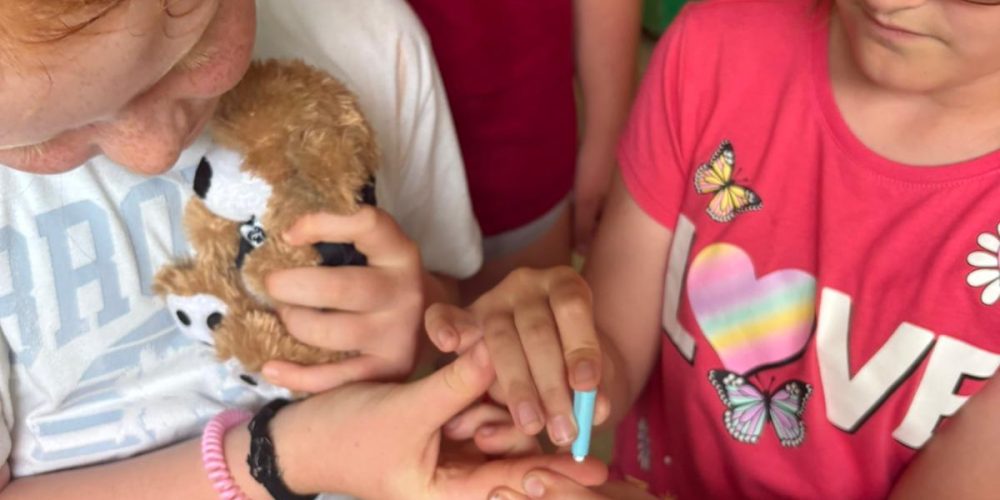
At camp, blood glucose management is an active and ongoing process. Both staff and campers are frequently checking levels and making thoughtful decisions to keep campers safe while allowing them to fully participate in camp activities.
For example:
- If a camper’s blood glucose is 105 mg/dL before a high-energy activity like swimming, staff may provide a few grams of glucose to help maintain a safe level during activity.
- If a camper’s blood glucose is 220 mg/dL, the cabin leader may consult with Health Lodge staff to determine the best approach, such as giving a correction dose, reviewing insulin on board, or considering recent activity and food intake.
These real-time decisions help balance safety, activity, and enjoyment, allowing campers to participate fully in camp while maintaining appropriate blood glucose management. While our range is 100-240, it doesn’t mean we are not actively monitoring blood glucoses in that range.
Daily Medical Review and Adjustments
Our medical team closely monitors every camper’s diabetes management throughout the week. Each day, our team of medical staff review campers’ blood glucose patterns and insulin dosing and makes adjustments as needed.
The first few days of camp are often an adjustment period as campers transition from their home routine to the more active camp environment. During this time, insulin needs may change significantly.
Our medical team works hard to:
- Review daily blood glucose trends
- Adjust insulin dosing based on activity, meals, and patterns
- Ensure each camper’s management plan is working well in the camp environment
- Create the safest possible experience for every camper
This continuous monitoring and adjustment help provide the best possible blood glucose management for each camper’s individual needs.
How the Medical Team Manages Diabetes at Camp
Our medical team includes pediatric endocrinologists, physicians, nurses, diabetes educators, pharmacists, and trained volunteers. Together, they:
- Check blood glucose and monitor CGM data frequently
- Adjust insulin dosing based on activity level, meals, patterns, and safety
- Treat highs and lows promptly
- Communicate with campers and help them understand their own diabetes management
- Record all blood glucose checks, insulin doses, and patterns
Our approach balances medical safety with camp enjoyment. We aim to prevent severe lows while still supporting healthy blood glucose management.
Reframing “Time in Range” at Camp
A lower percentage of time in tight range (such as 70–140 mg/dL) does not mean your child’s diabetes was poorly managed at camp. It often reflects:
- More activity than usual
- Hormone changes due to excitement and adrenaline
- Various eating patterns
- Environmental factors
- Safety-first insulin adjustments
Our goal is to help campers have a safe, fun, empowering experience, and part of that includes reducing the risk of dangerous lows while they participate fully in all activities.
Our Goal: Safety, Learning, and Independence
Diabetes camp is not just a place for fun—it’s a place where children build confidence, learn new skills, make friends, and gain independence in a medically supported environment. Our blood glucose targets reflect:
- Best practices from certified diabetes camps
- Guidance from pediatric endocrinologists
- Decades of experience caring for children with T1D in active outdoor settings
Please know that every decision we make is centered on your child’s health, safety, and success at camp.